

Courier, parcel or freight? What’s actually the difference?
A document, a cardboard box and a pallet can all be described as a “delivery.” That does not mean they should all move the same way. Here is a practical guide to courier vs parcel vs freight — without turning it into a logistics textbook.
Courier
Usually local, time-sensitive and more directly managed from pickup to delivery.
Parcel
Think boxes and packaged goods moving through a more standardized delivery process.
Freight
Larger, heavier or multi-piece shipments where capacity and handling become a bigger part of the job.
The categories overlap more than you might think.
There is not one universal line where a parcel suddenly becomes freight, or where a box stops being a parcel and becomes a courier shipment.
Different carriers and delivery companies may use the terms a little differently. For customers, the more useful question is usually not “What is the official name for my shipment?”
It is: How large is it, how quickly does it need to arrive and how does it need to be handled?
Describe the shipment first. The right delivery category usually becomes much clearer after that.
Courier vs parcel vs freight at a glance.
These are useful general differences rather than rigid rules.
| Question | Courier | Parcel | Freight |
|---|---|---|---|
| What is it usually? | Documents, boxes, parts and other local deliveries. | Standard packaged goods and cartons. | Larger, heavier, multi-piece or palletized shipments. |
| How urgent? | Often more urgent Same-day, rush or scheduled delivery. | Often routine rather than immediately time-sensitive. | Timing varies, but capacity and planning usually matter more. |
| How does it move? | More direct and locally coordinated. | Through a standardized package delivery process. | With greater attention to loading, vehicle space and handling. |
| Typical example | Signed contract needed across town today. | Standard boxed product shipment. | Pallet of inventory moving between facilities. |
| What matters most? | Speed, timing and direct handling. | Standardization and package movement. | Size, weight, capacity and loading needs. |
Same goal. Very different delivery jobs.
All three move something from one place to another. What changes is how much speed, space, handling and coordination the shipment needs.
When timing matters.
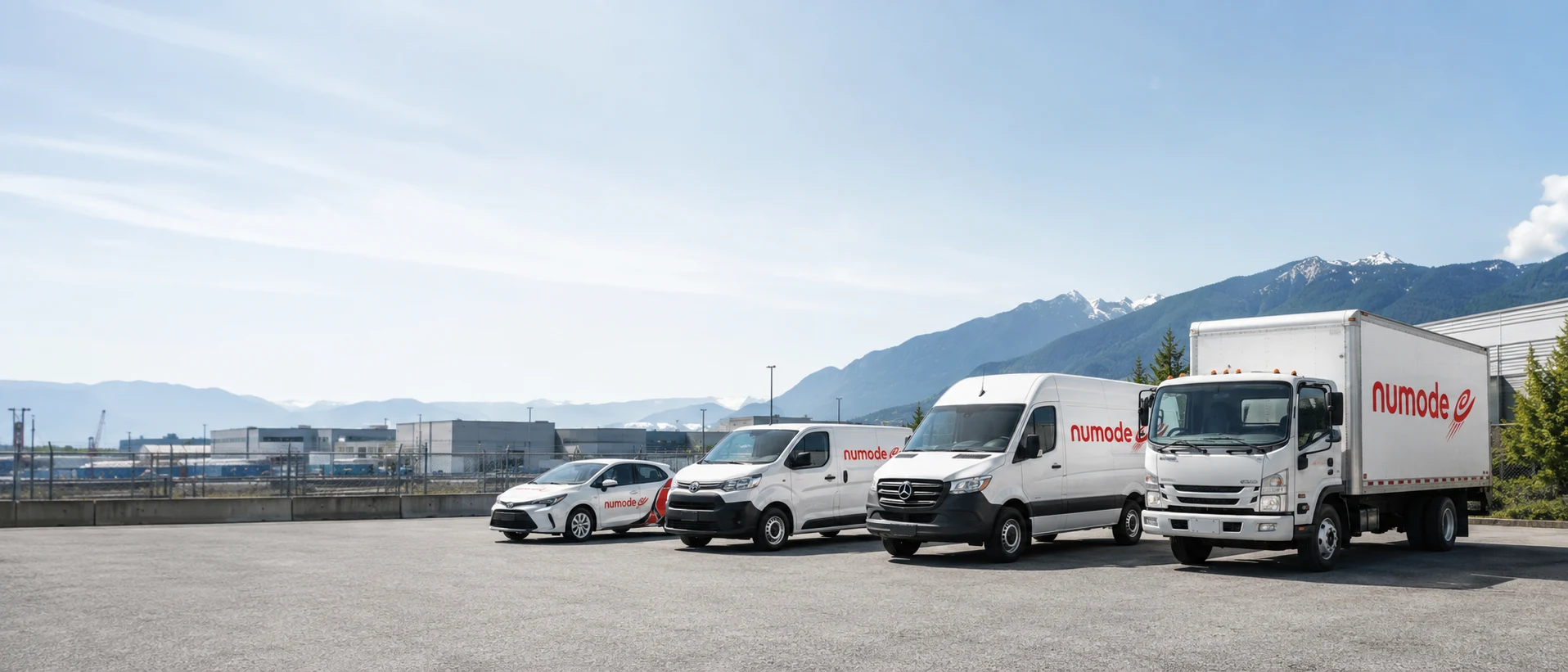
Courier service is often used when a shipment needs more direct, locally coordinated movement. The item itself might be tiny — even one envelope — but the deadline can make the delivery important.
When the package is standard.
Parcel is the familiar world of boxed and packaged shipments. The item is generally manageable, prepared for transport and able to move through a more standardized delivery process.

When size changes the job.
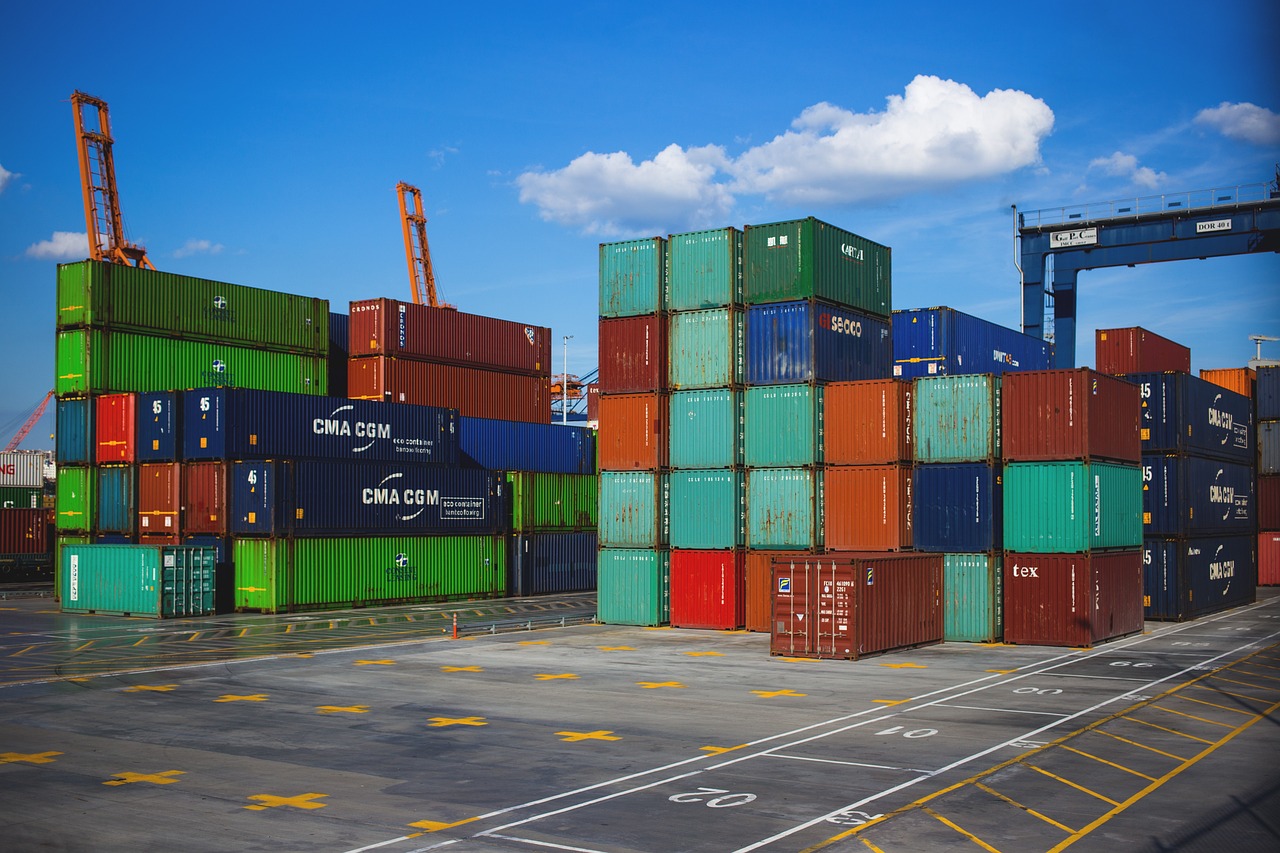
Once a shipment becomes larger, heavier or more complex, delivery starts becoming a capacity question. Multiple cartons, oversized items and palletized loads may need more space, different equipment or a larger vehicle.
Completely different shipment.
Imagine all three deliveries are going from Vancouver to Richmond. The route can be almost identical. What is being transported changes the job.
One signed contract
Original documents need to arrive at another office before the end of the business day.
One standard product box
The shipment is packaged, labeled and moving as part of a routine order with a flexible delivery window.
One pallet of inventory
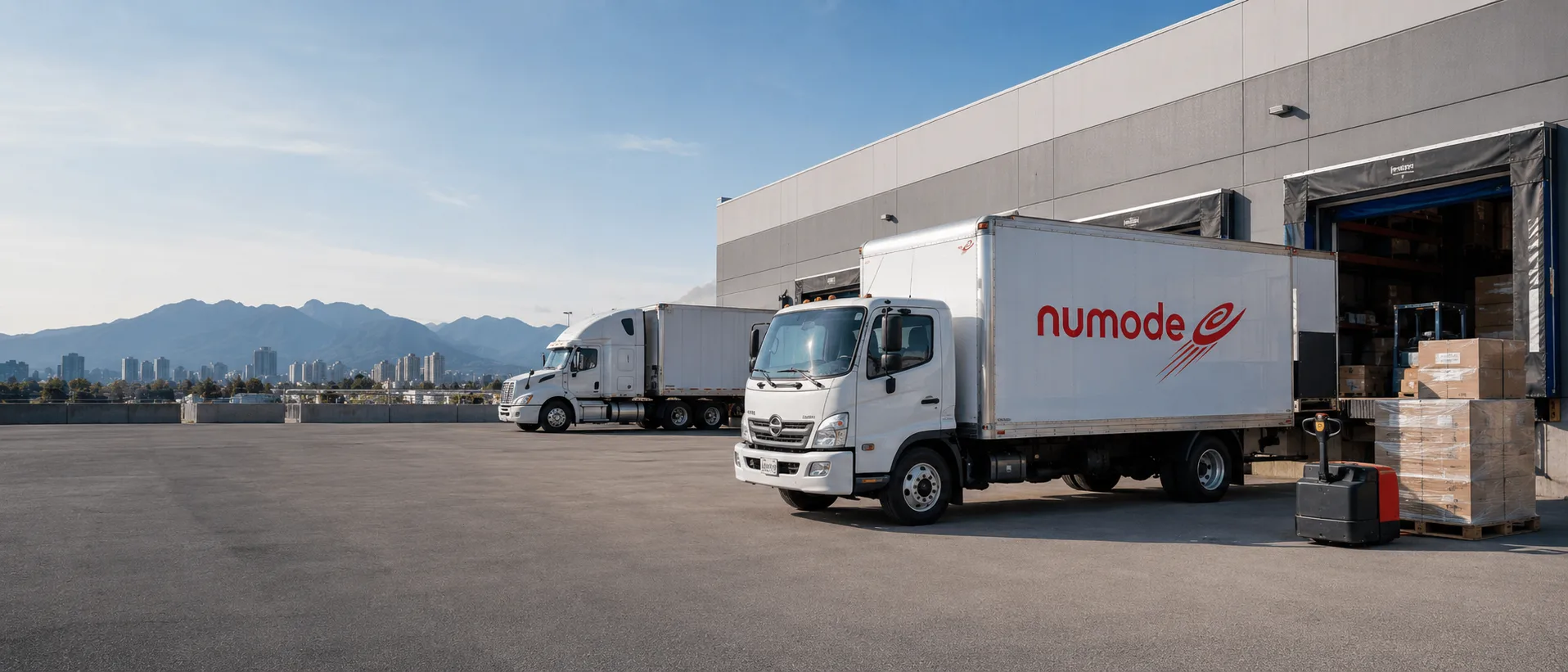
The shipment is large enough that vehicle space, loading and weight now become important parts of the delivery.
A 10 lb box needed in one hour can be a very different delivery from a 10 lb box that can arrive next week.
Start with the shipment, not the terminology.
If you are trying to decide between courier, parcel and freight, this will usually point you in the right direction.
Does it need to move quickly?
Documents, small boxes, parts or business items that need a direct or time-sensitive local delivery.
Think CourierIs it simply a regular box?
A manageable packaged shipment where the main requirement is getting the box from origin to destination.
Think ParcelDoes size change the vehicle?
Multiple heavy pieces, oversized items or pallets where loading and available cargo space become important.
Think FreightTell the courier what you actually have — dimensions, approximate weight, number of pieces and deadline. You do not need to diagnose your own shipment before asking for a quote.
One more thing: the labels are not universal.
Courier companies, parcel carriers and freight providers may define their services differently. A shipment that one company describes as freight may fit inside another company's larger-vehicle courier service. That is why dimensions, weight, pieces, route and deadline are more useful than relying on the label alone.
Just tell us what needs to move.
You do not need to decide whether to call it courier, parcel or freight before contacting us. Tell Numode where it is going, what it is, how large it is and when it needs to arrive.
Courier vs parcel vs freight FAQs.
A few common questions about the difference between these shipping terms.
What is the difference between courier, parcel and freight?
Courier service is generally associated with more direct or time-sensitive delivery. Parcel usually describes standard packaged shipments, while freight generally refers to larger, heavier, multi-piece or palletized shipments. Exact definitions can vary by provider.
Is courier service the same as parcel delivery?
They can overlap, but they are not always the same. A parcel describes a packaged shipment, while courier service often describes how that shipment is being delivered, particularly when the delivery is local, direct or time-sensitive.
When does a parcel become freight?
There is no single universal cutoff. Freight generally becomes more relevant as shipments become heavier, larger, palletized or more complex to load and transport.
Can a courier deliver large or heavy shipments?
It depends on the courier company's fleet and service capabilities. Courier services are not necessarily limited to envelopes and small boxes; some providers can accommodate larger shipments with vans, Sprinters or trucks.
Is freight always slower than courier delivery?
Not necessarily. Freight describes the type and scale of a shipment more than a guaranteed delivery speed. Timing depends on the service, route, vehicle availability and shipment requirements.
What information should I provide when requesting a delivery quote?
Provide the pickup and delivery locations, number of pieces, dimensions, approximate weight and required delivery time. Those details are usually more useful than trying to decide which shipping category your shipment belongs to.